Corruption Time
Play Corruption Time
Corruption Time Screenshots


Corruption Time review
A player-first guide to mechanics, progression, choices, and player experiences
Corruption Time is an adult-oriented indie game that blends branching narrative, character progression, and player choice into a provocative interactive experience. This article digs into Corruption Time from a player’s perspective: how it plays, what to expect from story and systems, practical installation tips, and tactics that helped me progress during my early sessions. If you’re curious about mechanics, pacing, or how community feedback shapes updates, this guide will walk you through the key aspects and share hands-on insights.
Gameplay and Core Mechanics of Corruption Time
Alright, let’s get our hands dirty. If you’re here, you’re ready to move past the teasers and dive into what makes Corruption Time tick. This isn’t just a visual novel where you click through text; it’s an intricate simulation where every choice has weight, every stat shift tells a story, and your path to power (or something else entirely) is uniquely your own. I’m here to break down the Corruption Time gameplay from the ground up, so you can master its systems and carve your own destiny. 🎮
Buckle up—this is your player-first manual to the mechanics, progression, and choices that define the experience.
How the game plays: interface, control and navigation
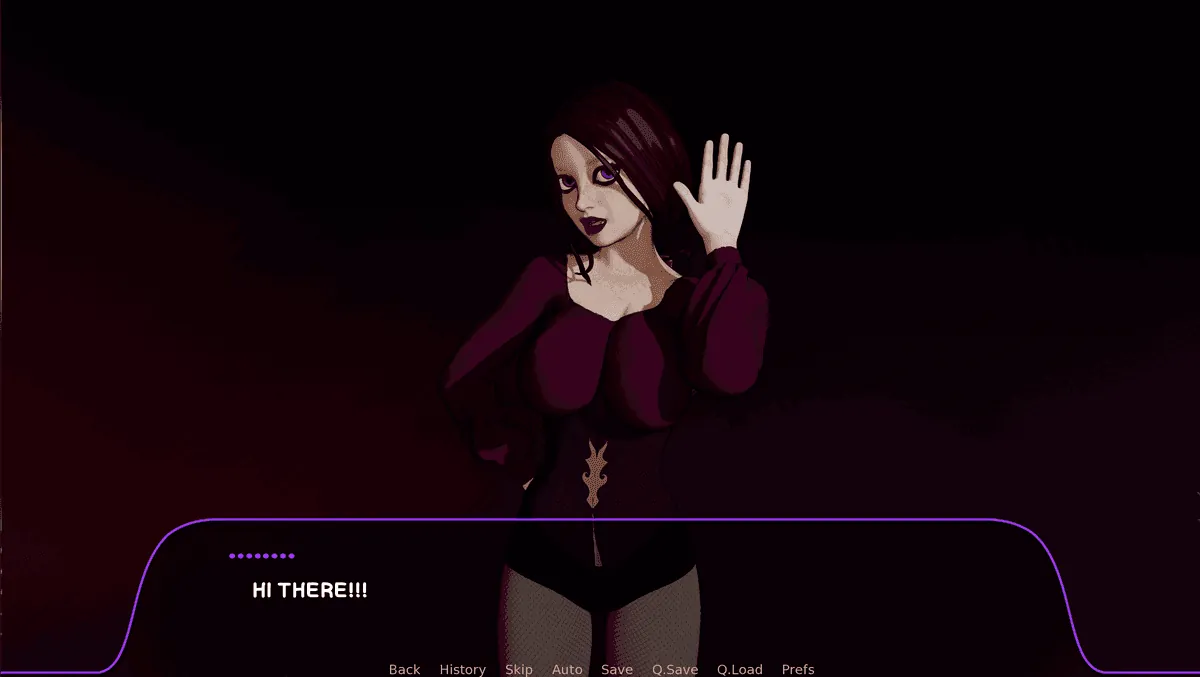
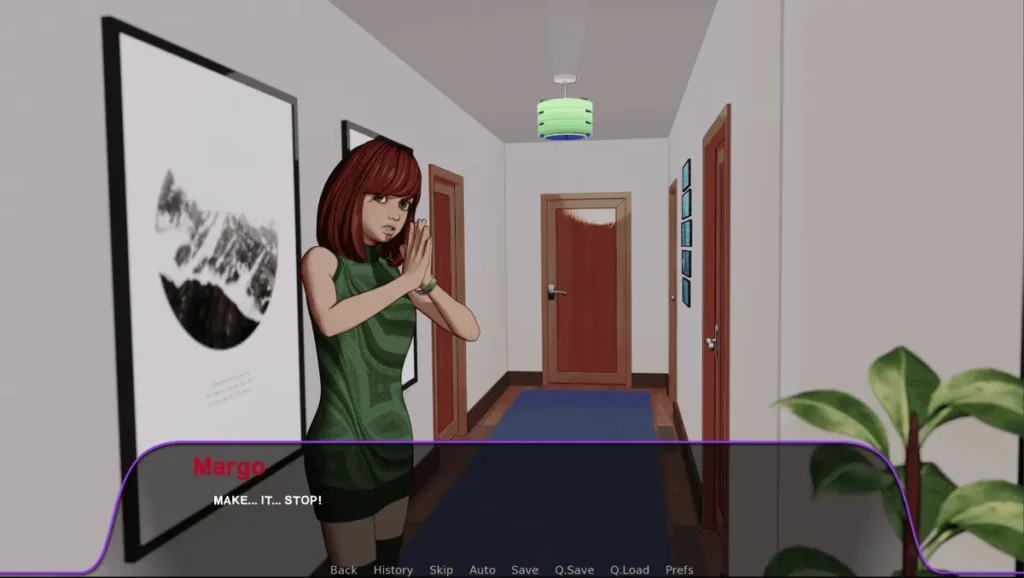
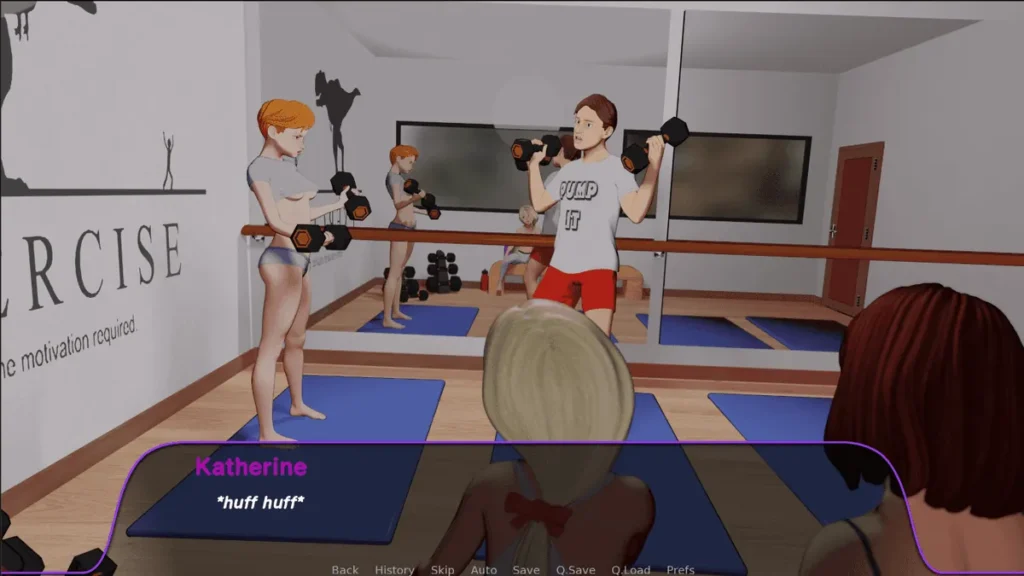
First impressions matter, and Corruption Time greets you with a clean, immersive interface designed to keep you in its world. The core screen is your window into the story, with dialogue occupying the center stage. Character sprites are expressive, and subtle background animations sell the atmosphere.
Navigating this world is intuitive. You’ll spend most of your time reading and making choices via clearly marked dialogue options. A tap or click advances text. The real magic, however, lies in the Corruption Time controls beyond mere clicking. Pressing ‘Esc’ or clicking the menu button in the corner brings up your central hub. Here’s where you manage your life:
- The Stats Screen: Your numerical soul. This is where you monitor your Willpower, Corruption, and key Attributes.
- The Inventory: For key items that can influence scenes or unlock special dialogue.
- The Relationship Log: A vital tracker of your standing with other characters, often the key to unlocking new routes.
- The Map: Not always a literal cartographic map, but a scene selection screen that becomes available as you unlock new locations and time slots in your day.
The saving system is your best friend. You get multiple save slots—use them liberally. I recommend saving before any major story branch or uncertain choice. There’s no worse feeling than being 30 minutes deep into a consequence you didn’t want and realizing your last save was hours ago. 😅
To give you the ultimate quick start, here’s a breakdown of the essential functions you need to know:
| Action | Control / Location | Primary Function |
|---|---|---|
| Advance Dialogue | Mouse Click / Spacebar / Enter | Progress through story text and prompts. |
| Open Main Menu | ESC Key / Menu Button (UI) | Access Stats, Inventory, Save/Load, Settings. |
| Quick Save | F5 Key (Commonly) | Instantly save to a designated quick-save slot. |
| Quick Load | F8 Key (Commonly) | Instantly load from the quick-save slot. |
| Hide UI | H Key | Toggles interface off for screenshots or immersion. |
| Auto-Play Mode | A Key / UI Toggle | Automatically advances text at a set speed. |
| Log History | Mouse Scroll Up / L Key | Review previous dialogue lines. |
When it comes to interactive encounters, Corruption Time often uses skill checks and narrative choices rather than traditional combat. You might face a quick, tense decision point where a high enough Willpower stat lets you resist a tempting offer, or a sufficient Cunning attribute unlocks a deceptive way out of a tight spot. Think of it less as turn-based fighting and more as a psychological battlefield where your stats are your weapons and armor. ⚔️
Progression systems: stats, rewards, and transformation mechanics
This is the heart of Corruption Time progression. You aren’t just watching a story unfold; you are actively molding the protagonist through every decision. The core loop is brilliant in its simplicity: make choices, see your stats shift, unlock new options based on those stats, repeat.
Your character is defined by a set of core metrics. The two most crucial are often Willpower and Corruption. Willpower represents your resolve, your morals, your “self.” Corruption represents… well, the allure of new power, darker pleasures, or simpler, more selfish solutions. They exist in a constant tug-of-war. 🪢
But there’s more! You’ll also have attributes like Charm, Intellect, Cunning, or Physical Prowess. Raising these isn’t just about number-go-up; they directly gatekeep content. A high Charm might let you sweet-talk a guard for information, while high Intellect could allow you to decipher an ancient text for a hidden advantage.
The transformation mechanics are where Corruption Time gameplay truly shines. As your Corruption rises (or other specific conditions are met), your character doesn’t just change ethically—they can change physically and mechanically. New dialogue options, exclusive scenes, and even altered story paths open up. You might gain an ability to sense others’ desires, or your appearance might shift to reflect your inner change, which in turn affects how others react to you.
Personal Anecdote Time: I totally botched this on my first run. I thought the transformation was a single, dramatic event at the end of a path. So I avoided all “Corruption” choices like the plague, keeping my Willpower maxed. I hit a story wall where I needed a certain “Corrupted Insight” to progress a fascinating subplot, and I couldn’t access it. My pure character was literally too “innocent” to understand the darker machinations at play! I reloaded, made a few deliberately sinful choices to nudge my Corruption just over a threshold, and BAM—a whole new layer of the story opened up. It taught me that progression here isn’t about being “good” or “bad,” but about consciously shaping a persona capable of engaging with the world in all its complexity. 🤯
Rewards come in many forms: unlocking new scenes (the bread and butter), gaining special items, deepening relationships, and achieving new “states” or “titles” for your character that persist and inform the narrative.
Choice and consequence: branching routes and endings
If the stats are the engine, choices are the steering wheel. Choices and endings Corruption Time offers are deeply intertwined. This isn’t an illusion of choice; the branches are real, wide, and often hidden.
Every significant dialogue option or action is a fork in the road. Some are obvious: “Help the stranger” vs. “Walk away.” Others are subtle, hinging on a stat check you might not even see. Did you build up enough trust with Character A earlier? That might give you a unique third option here that avoids a conflict entirely.
The narrative branches are like a growing tree. An early, seemingly minor choice—like taking a mysterious artifact versus destroying it—can determine which entire branch of the story you’re on 5 hours later. You might find yourself in a political intrigue plot, a supernatural horror story, or a personal drama of downfall and redemption, all based on your cumulative decisions. 🌳
Endings are not simply “Good, Bad, and Secret.” They are nuanced conclusions to the specific journey you crafted. You could achieve a “Victorious Tyrant” ending, a “Sacrificial Martyr” ending, a “Enlightened Compromise” ending, or a “Lost to the Depths” ending. Your final stats, key choices, and completed relationship arcs all combine to place you on the spectrum of possible conclusions. Replayability is huge because seeing how different early choices spiral into completely different mid-game scenarios and finales is the core joy.
Practical Early-Game Strategy:
1. Experiment and Save: Use your first hour to test reactions. Save before big choices and explore both paths briefly to see the immediate stat shifts.
2. Focus on One or Two Stats: Don’t try to be a master of everything early on. Pick a persona—maybe the silver-tongued Charmer or the resilient Willpower fortress—and lean into choices that boost those primary stats. This stabilizes your identity and unlocks specialized routes faster.
3. Pursue One Relationship: Instead of spreading your attention thin, pick one major character and try to raise your affinity with them through choices they like. This is often the fastest way to unlock a pivotal, route-defining story beat.
4. Don’t Fear Corruption: It’s not a “bad” meter. Think of it as an “alteration” meter. Let it fluctuate to access different types of content.
Your “How to Play Corruption Time” Quick-Checklist:
✅ DO:
* Save often and in multiple slots.
* Read the flavor text—descriptions often hint at stat changes.
* Embrace a role and make choices that fit it for a cohesive first run.
* Check your relationship log after key scenes to see your impact.
* Replay to explore different stat builds and see wildly new content.
❌ DON’T:
* Try to min-max all stats on a first playthrough (it’s nearly impossible).
* Ignore the inventory; some items are useable in specific scenes.
* Assume high Willpower = “winning” or high Corruption = “losing.”
* Get discouraged by a “bad” ending; it’s just one story of many.
* Skip through text you’ve seen before without checking if your new stats have altered the dialogue!
Mastering the game mechanics Corruption Time throws at you is about understanding that you are both the author and the subject of this tale. Your Corruption Time progression is a personal log of change, and the choices and endings Corruption Time provides are your reward for engaging deeply with its systems. Now that you know how it all works, you’re ready to step in and truly begin your own time of transformation. Good luck—you’ll need it, and you’ll love every minute of it. 🔮
Corruption Time delivers a branching, choice-led experience that rewards curiosity, planning, and repeated playthroughs. This guide covered how the game plays, the central narrative and characters, practical installation and update advice, stage-by-stage strategies, and community resources to support your experience. Try one focused run with clear goals (one relationship route or one alternate ending) to learn the systems quickly, keep backup copies of saves before major updates, and tap community guides for advanced routes. If you enjoyed this walkthrough, share your own standout choice or run in the community channels to help other players learn.